A cold greenhouse is not a heated one, and that is perfectly workable. The glass or polycarbonate gives you a longer season, protection from wind and rain, and a warmer microclimate than any outdoor bed. What it will not do is rescue tomatoes from cold nights in March or keep them comfortable in a sealed, baking July. Get those two extremes right, choose sensible varieties, and an unheated 6x8 in a British garden will crop from July into October, with the odd late truss ripening on a windowsill.
Choose varieties that cope with cool nights
Outdoor tomatoes are bred to shrug off lower temperatures; most greenhouse beefsteaks are not. As a beginner, start with reliable cordon (indeterminate) types that set fruit well in fluctuating temperatures, and add one or two bush or trailing varieties for pots.
- Cherry: 'Gardener's Delight' for flavour, 'Sungold' for an orange, remarkably sweet cropper. Both are forgiving.
- Standard red: 'Alicante' and 'Shirley' are classic greenhouse cordons that fruit early and keep going.
- Beefsteak: 'Marmande' or 'Costoluto Fiorentino' — big fruit, slower to ripen, best in the warmest spot.
- Blight-tolerant: 'Ferline' and 'Crimson Crush' are worth a try if the greenhouse is damp or you garden in the west.
- Pots and hanging baskets: 'Tumbling Tom', 'Totem' or 'Vilma' — compact bush plants that need no pinching.
Sowing times for a cold greenhouse
Tomato seed needs steady warmth to germinate — around 18–21°C — so in a truly unheated greenhouse in February you are gambling. Sow indoors on a bright windowsill or in a heated propagator, then move the seedlings to the greenhouse once they are up.
- Late February to mid-March: sow for an early, slightly riskier crop. Good for southern gardens and a greenhouse with some night protection.
- Mid-March to early April: the safest window for most of the UK. Seedlings establish quickly as light levels rise.
- April: a useful second sowing for continuity, cropping into late autumn.
Sow thinly in moist seed compost, cover lightly, and germinate somewhere warm — an airing cupboard is too dark once shoots appear, so check daily. Prick out into 9cm pots when the first true leaves show, burying the stem a little deeper than it was. Tomato stems root along their length, which builds a sturdier plant.
Potting on, planting out and support
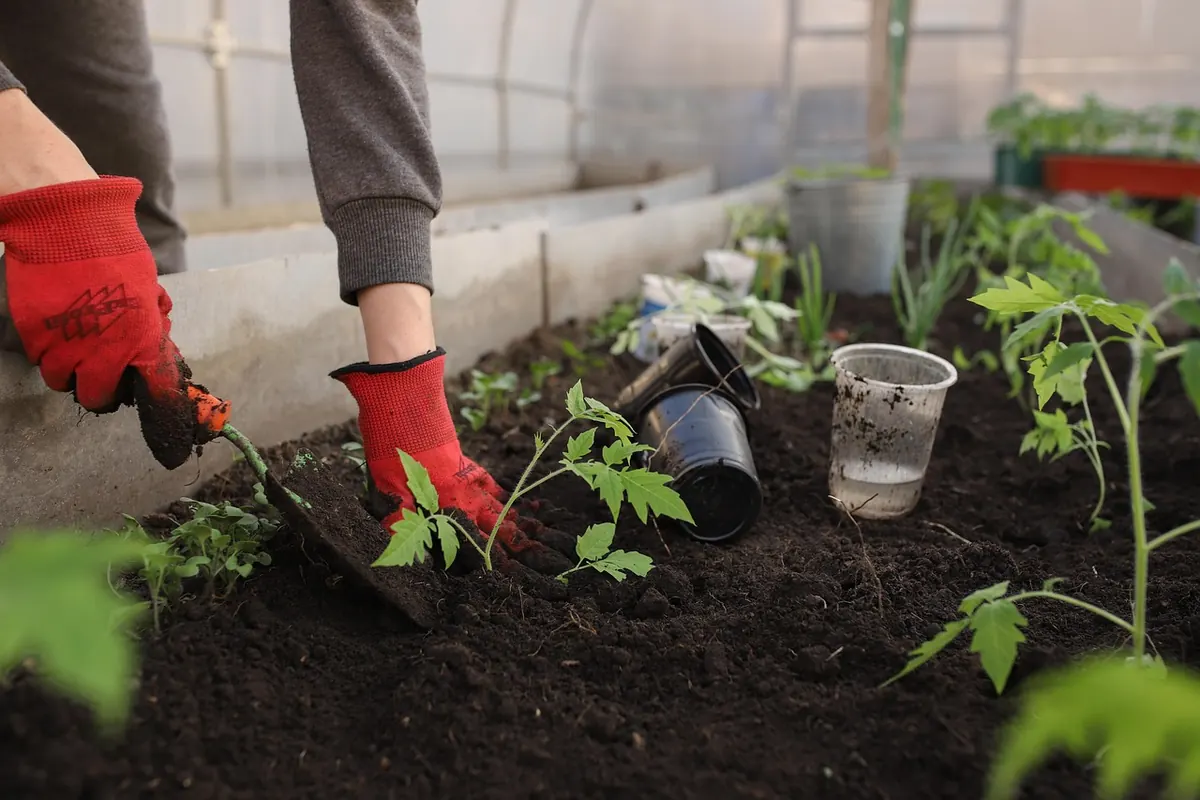
Move plants into larger pots as roots fill the old ones, and harden them off for a week before committing them to the greenhouse border, growbags or final pots. In most of the UK, late April to mid-May is the sensible moment; frost can still bite in early May, and a greenhouse without heating will hover close to zero on a clear night.
Cordon plants need vertical support from day one — a cane, a string dropped from the greenhouse frame, or a spiral. Space them about 45cm apart, with 60–75cm between rows, and give growbags just two plants each rather than the three printed on the label; the extra root room makes a real difference to how long they crop.
As cordons grow, remove the side shoots that appear in the angle between leaf and stem, weekly, while they are small enough to snap out with fingers. Let the plant carry five or six trusses, then pinch out the growing tip in late summer so the energy goes into ripening what is already set. Bush varieties need no pinching at all — just a little room.
Watering and feeding without drama
Most beginner disappointments come down to water. Tomatoes hate drought followed by a flood. Aim for consistently moist compost, watering at the root rather than over the leaves, in the morning where possible. In a hot spell, plants in pots may need watering twice a day; those in a border need far less.
A mulch of compost or grass clippings slows evaporation, and a simple drip line or soaker hose on a timer removes the guesswork entirely. Start feeding with a high-potassium tomato fertiliser when the first truss has set — not before, or you will get leaves rather than fruit — and repeat weekly, slightly more often for growbags, which run out of nutrients quickly.
Tap the supports or gently shake the flowers at midday to help pollination. In a still, closed greenhouse, fruit set is often poor simply because nothing is moving the pollen.
Ventilation: the job that decides your crop
An unheated greenhouse on a sunny June day can exceed 35°C, which causes flower drop, leathery fruit and stressed plants. Open vents early, ideally before nine in the morning, and close them mid-afternoon to trap warmth for the evening. Roof vents matter more than louvres; hot air leaves from the top. Automatic vent openers are a sound investment if you are out at work.
Damp, still air is the other enemy. It encourages grey mould, leaf mould and blight. Keep foliage dry, water the floor on hot days to raise humidity without soaking leaves, and remove yellowing lower leaves below the first truss to improve airflow around ripening fruit. In July and August, shade netting or shade paint on the sunniest side will keep temperatures and fruit quality steadier.
Troubleshooting the usual suspects
- Dark, sunken patch on the base of the fruit (blossom end rot): a calcium uptake problem caused by erratic watering. Pick off affected fruit and water more evenly.
- Leggy, pale seedlings: too warm and too dark. Move them somewhere cooler and brighter as soon as they germinate.
- Split fruit: a dry spell followed by heavy watering. Keep moisture steady and pick ripe tomatoes promptly.
- Rolled leaves: usually heat or water stress rather than disease. Check the compost before panicking.
- Whitefly or red spider mite: improve ventilation, avoid dry baking air, and inspect the undersides of leaves regularly.
- Brown patches on leaves and stems in August: suspect blight. Remove affected material straight away and keep the greenhouse well ventilated.
Keeping it simple in your first year
Pick three or four varieties, sow in mid-March, plant out when nights are reliably mild, and treat watering and ventilation as your two daily jobs. Feed once fruit has set, pinch the cordons weekly, and keep a note of what ripened well and when. Next February, that scribbled note will be the most useful thing in your greenhouse — more so than any new gadget.
Photo: Katya_Ershova / Pixabay